


Your breath slows and holds before dawn. Ambient synth in a desolate gothic ruin
In thecollection

Pagoda Serenity
Where it plays in the hour
Track 18 of 22 · 43:44-
18
Gothic RuinThis track · Ambient · 60 bpm
43:44




















At a glance
Mood
Sound palette
Key
Ambient synth for a gothic ruin before dawn: Gothic Ruin by Dr.DIO
Ambient synth for gothic ruins before dawn is exactly what Gothic Ruin delivers: a slow, relaxing instrumental by Dr.DIO built at 60 BPM in F minor.
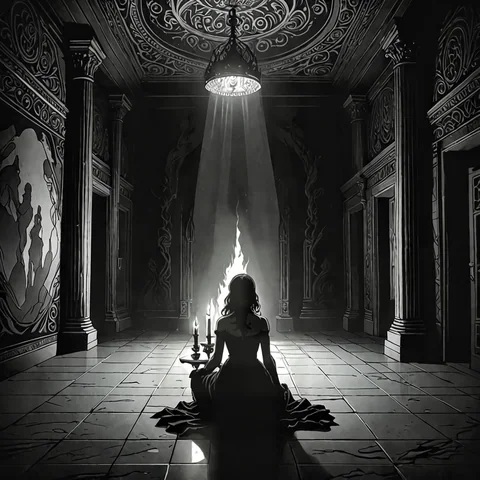
The piece sits mostly in ambient territory, with downtempo shading, a thread of experimental sound design and a faint trace of dub in the low end. Picture a roofless nave with the sky still grey, frost on broken arches, and nothing moving except your own breathing. The synthesizer pads hold that stillness without turning it dark or heavy, so the mood stays calm and works well in the background while you read, think or simply wait for first light.
Questions about Gothic Ruin
What genre is Gothic Ruin?
Gothic Ruin is mainly ambient, with downtempo, experimental and light dub influences, built around slow synthesizer pads, a sparse piano and a soft bass line in F minor.
Does Gothic Ruin have vocals?
No, Gothic Ruin is fully instrumental. Synthesizer, piano, bass, guitar and distant drums carry the whole piece, leaving plenty of room for your own thoughts.
What is Gothic Ruin good for?
It suits relaxing, late reading, journaling, gentle stretching and winding down in the evening, and it works as calm background music for moody creative work.
Which Dr.DIO collection is Gothic Ruin in?
Gothic Ruin appears in the Pagoda Serenity collection, subtitled Ambient Downtempo for Late Relaxing, alongside other slow and peaceful pieces by Dr.DIO.
How fast is Gothic Ruin?
It moves at a very slow, breathing pace, closer to a resting heartbeat than a dance groove, so the music feels spacious and unhurried from start to finish.
You mayalso like









Similarcollections

Honey Cliffside

Meteor Waters

Azure Thicket

Galaxy Gaze

Coral Reverie

Twin Worlds
This track is ours, so the license is simple. No collecting society fees, no copyright claims.
Cold stone, warm piano and a held breath
The first thing you hear is space. Long synthesizer tones open like a cold draught moving through a broken window, and a quiet piano drops single notes into that hollow, each one left to ring until it fades. Underneath, the bass is more felt than heard, a soft weight that keeps the room from floating away. The guitar appears rarely, a few muted touches that add grain to the surface. Nothing asks for attention, which is the gift here: the track lowers the pulse of a busy evening and leaves a clear, unhurried calm behind.
Tonally, F minor gives the piece a shadowed colour without sliding into gloom. The experimental side shows in small details: a pad that bends slightly out of tune, a reverb tail that lasts longer than expected, a filtered texture that hovers at the edge of hearing. These touches keep the ear curious. The drums, when they arrive, are brushed and distant, closer to footsteps on stone than to a beat. Listeners who like dark ambient but want something gentler for a late hour will find the balance right, restful and quietly strange at once.
How the slow pulse settles and drifts
At 60 BPM the music breathes rather than marches. Each phrase takes its time, inhaling through a rising pad and exhaling as the piano lets a chord decay. The structure is built from slow layers: a bed of synthesizer first, then the bass, then a sparse melodic line that returns with small changes, like the same corridor seen in shifting light. There are no sudden drops or bright climaxes. Instead, density swells gently in the middle and thins again, so the whole piece feels like one long held breath released in stages.
The downtempo influence gives the arrangement a soft spine. A dub-tinged echo trails some of the bass notes, stretching them across the stereo field so they seem to come from another room of the ruin. Guitar fragments sit far back in the mix, bending the texture without breaking the stillness. Toward the close, the layers fall away one by one until only a pad and a few piano notes remain, an ending that feels like the sky turning pale over broken stone rather than a curtain dropping.
Late hours, quiet rooms and Pagoda Serenity
Gothic Ruin belongs to the quiet edges of the day. Put it on during a late reading session, while sketching or journaling, during slow stretching, or as a calm background for winding down after work. It suits candlelit rooms, rainy windows and the grey hour before dawn when the house is still. Writers and game designers looking for a moody bed for a castle scene or an abandoned chapel will find it useful too, since it sets atmosphere without crowding words or thoughts. Keep the volume low and let it fill the corners.
On Dr.DIO the track lives in the Pagoda Serenity collection, subtitled Ambient Downtempo for Late Relaxing, a set of slow pieces made for the hours after the noise of the day has faded. Gothic Ruin is one of its darker rooms, older stone among the lanterns, yet it shares the same unhurried patience as its neighbours. If you want a few minutes of stillness with a little mystery in it, press play, dim the lights and let the ruin settle around you before the sun comes up.