
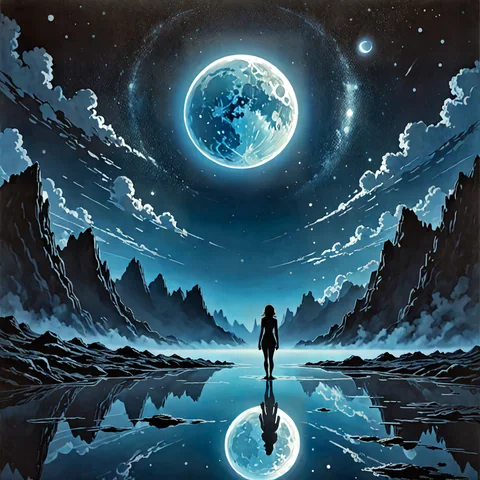
You hold your distance on cracked ice. A downtempo guitar beside the moonlight
At a glance
Mood
Sound palette
Key
Trip hop guitar for moonlit nights, heard from the Night Room
Trip hop guitar for moonlit nights sums up Night Room, a relaxing downtempo track by Dr.DIO with vocals, set at 90 BPM in G minor.
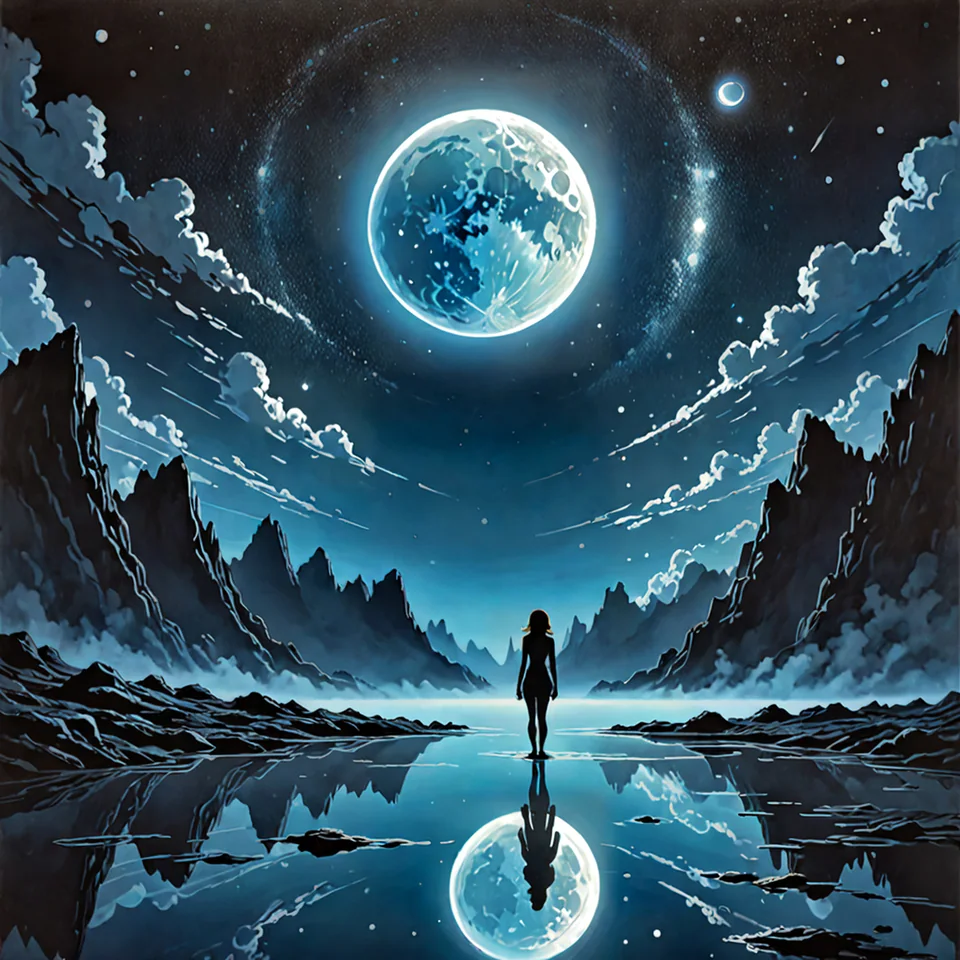
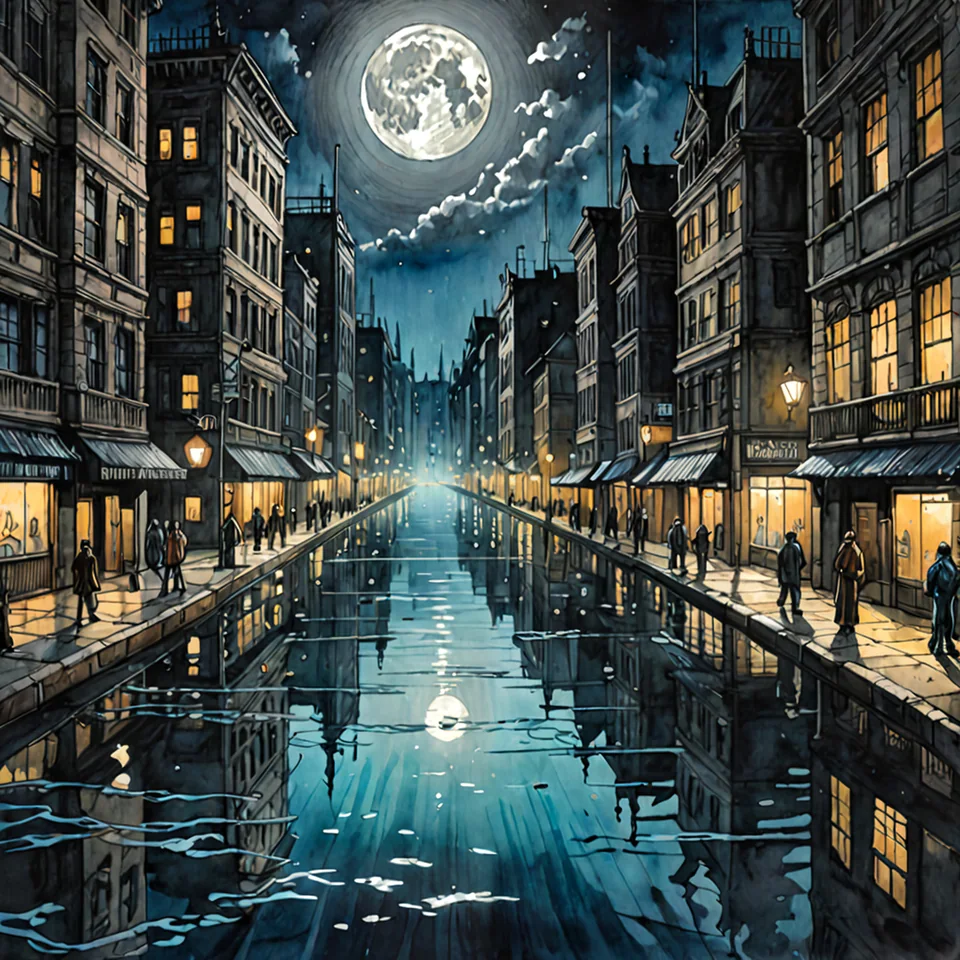
It leans on boom bap drums and the warm chords of jazzy hip hop, yet the guitar is the thing you remember long after it ends. The picture is a figure standing on cracked ice, keeping a careful distance while the moon watches from above. Every element is placed with restraint, so the song works as deep background or as close listening on headphones in a dark room. Nothing about it is loud, and that is precisely its charm.
Questions about Night Room
What genre is Night Room?
Night Room is a downtempo track by Dr.DIO that blends boom bap, trip hop and jazzy hip hop into a relaxing, deep groove with vocals.
Does Night Room have vocals?
Yes, it has vocals. They stay close and calm in the mix, sitting beside the guitar and piano rather than standing in front of them.
How fast is Night Room?
It moves at a relaxed head nodding tempo in G minor, slow enough for background listening and steady enough to keep a gentle groove going.
What is Night Room good for?
It fits late night reading, writing, sketching, walks home through quiet streets and calm evening dinners, anywhere you want relaxing background with some depth.
Where can I listen to Night Room?
You can listen to Night Room free on its release page at drdio.studio, alongside the rest of the Dr.DIO catalogue.
You mayalso like








Similarcollections
Timber Lodge

Saltflat Outpost
Storm Office

Home Library
Reading Nook

Silent Inlet
This track is ours, so the license is simple. No collecting society fees, no copyright claims.
Cool guitar and jazzy piano under moonlight
The guitar arrives first, a few clean notes that ring out and fade like breath on a cold window. Piano answers in low jazzy voicings, never more than a couple of chords at a time, while the bass hums somewhere under the floorboards. A thin synthesizer layer adds the moonlight, a pale glow that fills the gaps without drawing attention to itself. The vocals sit close and calm, more like a voice in the next room than a performance.
What the listener gets is distance without coldness. G minor gives the harmony a shaded, thoughtful colour, and the slow pace leaves room for every note to settle. Nothing in the arrangement asks for more than it needs. That economy is what makes the track deep rather than merely quiet, the sort of piece that rewards a second listen once the house has gone still.
A boom bap pulse that never hurries
Rhythm comes from the boom bap tradition: a dry kick, a snare with a slight lazy drag and drums that nod rather than drive. At 90 BPM the groove sits right where a head starts moving on its own. Trip hop shading creeps in through the space around the beat, those pauses where only the bass and a fading guitar tail remain hanging in the air. The drums never fill, they simply hold the line.
The layers stack slowly and never crowd each other. Midway through, the piano opens up a little, letting a phrase hang longer before the guitar returns to close it. The synthesizer swells by a degree and then backs away, like ice creaking under weight and holding. It is a texture built from small shifts, and those shifts are what keep a short piece feeling complete.
Late hours, reading lamps and quiet streets
Night Room belongs to the hours after the day has been put away. It suits reading under a single lamp, writing or sketching with the city gone quiet outside, and walking home along wet streets with headphones in. As relaxing background it keeps conversation easy at a small late dinner, and it gives a slow evening edit or a moody video a steady, unhurried spine.
The track is not yet filed inside a Dr.DIO collection, so it stands alone as a single for anyone who likes jazzy hip hop with a downtempo heart. Solitude suits it, honestly, since the whole song is about keeping a little distance. It is short, so let it loop once or twice and notice how the melody keeps finding new corners. Turn the lights down, put the guitar in the centre of your attention and press play when the moon is up.